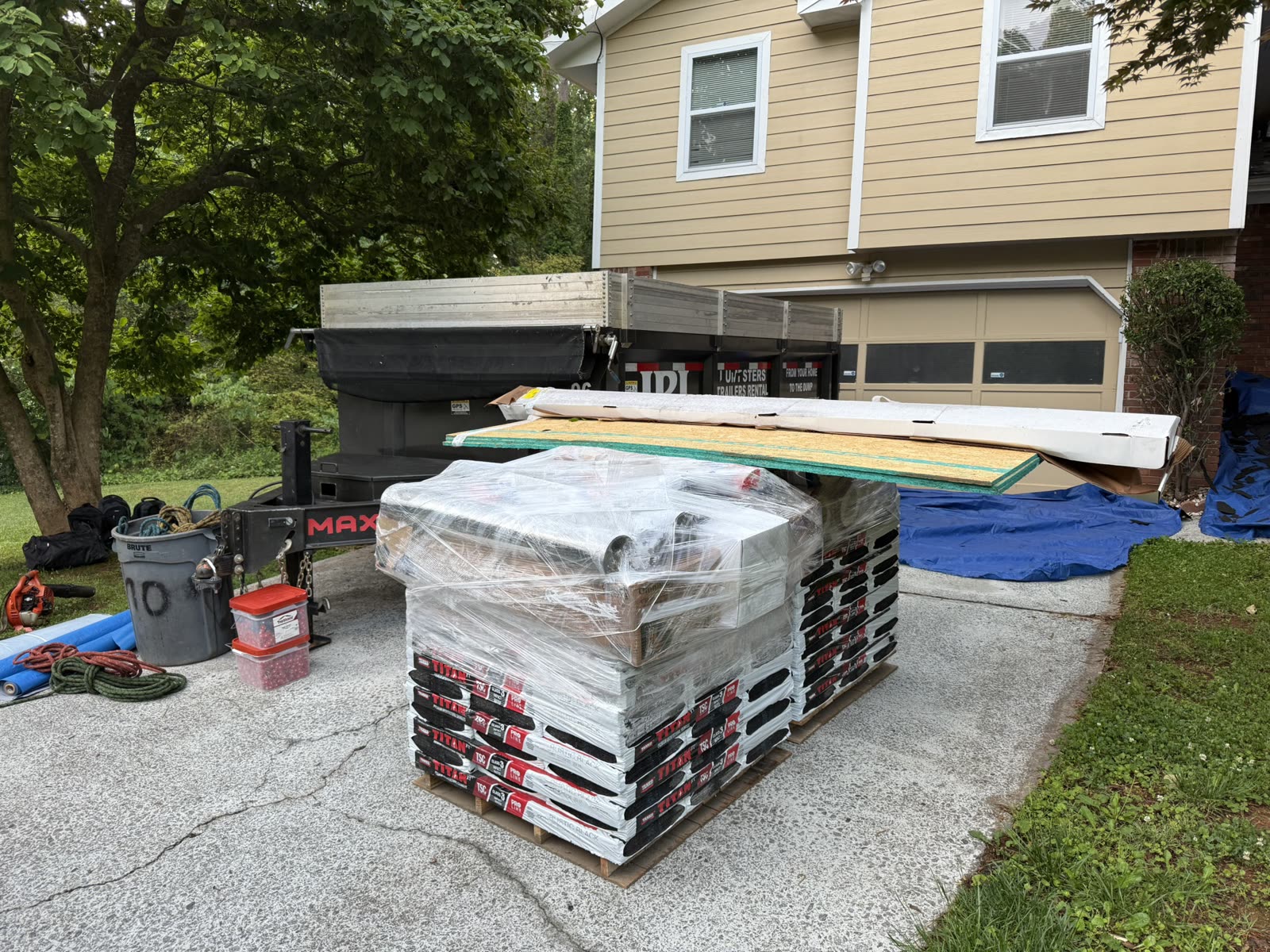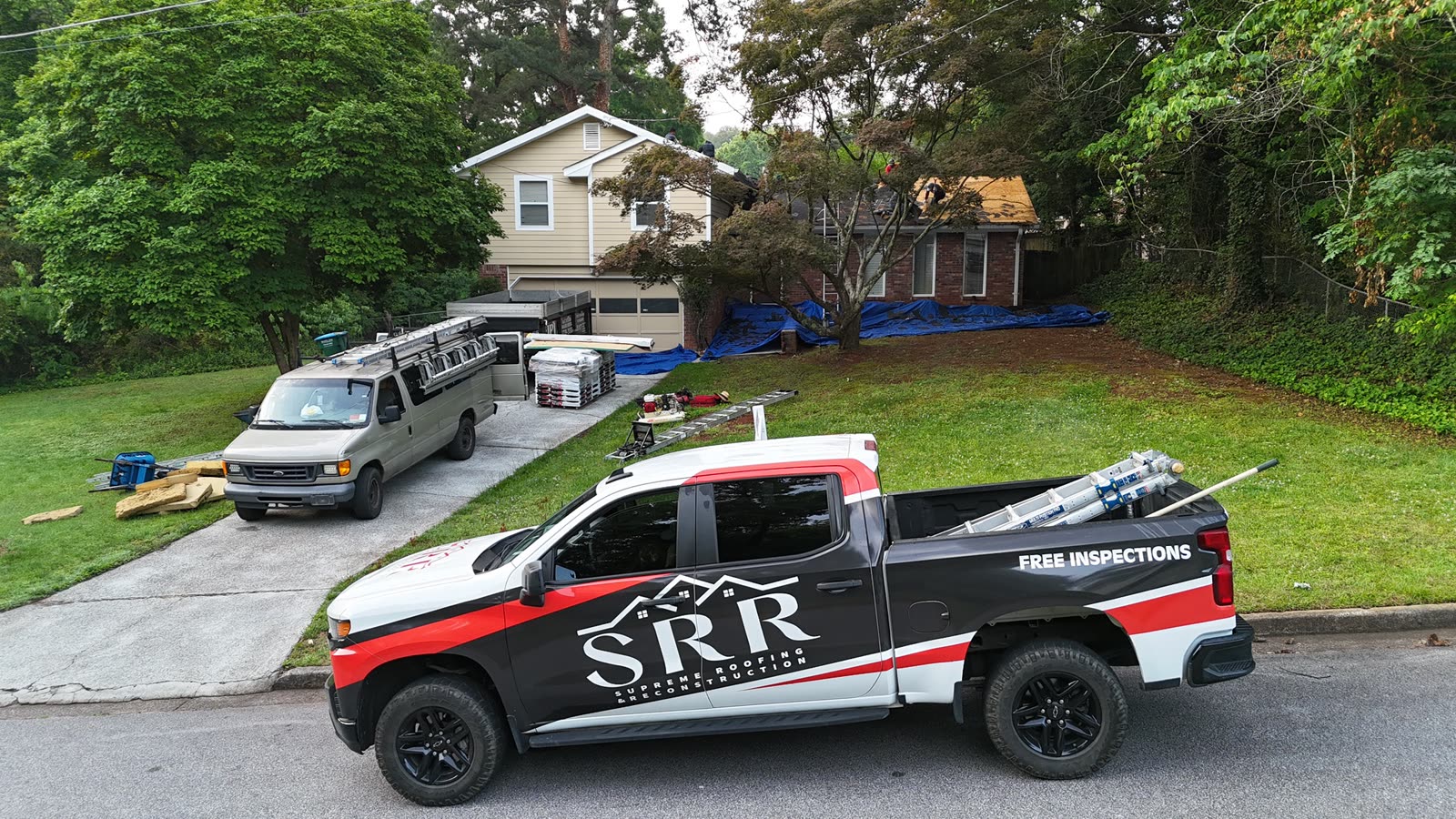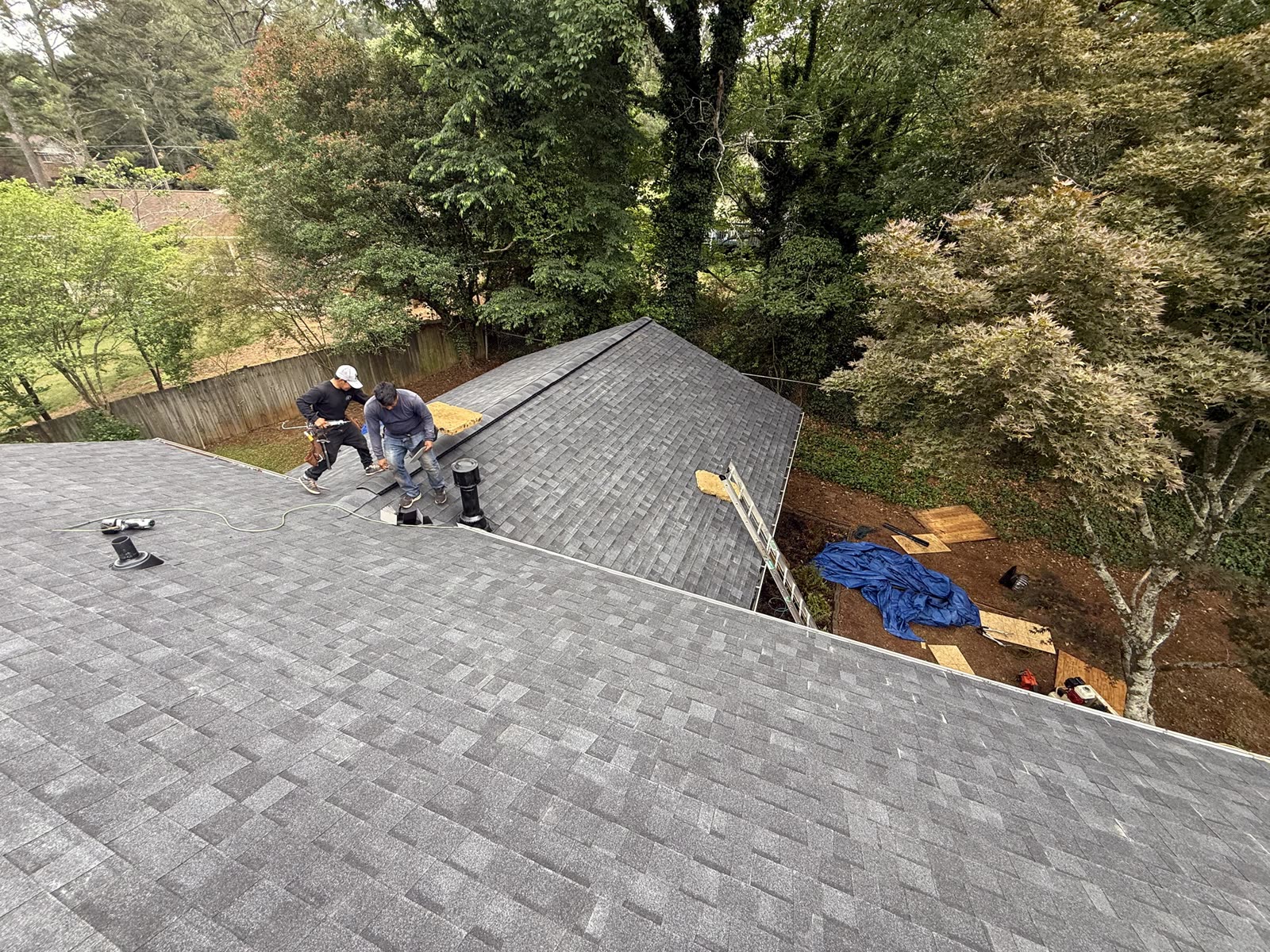
Selling a house with a bad roof is one of the most common — and most expensive — mistakes we see in Gwinnett County. The buyer’s inspector finds it, the buyer’s agent prices it at the worst-case number, and the seller eats it in negotiation. This family did it the smart way: fix the roof on your own terms, before it becomes the buyer’s bargaining chip.
What the inspection found
Our inspector documented the roof end to end before anyone talked price. The findings were exactly the kind that kill a sale: granule loss and bruising from hail impact, shingles torn and creased from wind uplift, dented HVAC vents, box vents and downspouts, and soft spots underfoot across several slopes — the signature of a leak that had been rotting the decking from underneath.
And one more thing worth calling out: a previous repair attempt had damaged the shingles around it and made the problem worse. We see this constantly. A cheap patch by the wrong crew doesn’t just fail — it spreads. By the time we got on this roof, the repair area was in worse shape than the original problem.
The roof, by the numbers
Measurements come from the EagleView aerial report, the industry-standard measurement service, ordered before we quoted a single dollar:
| Total roof area | 2,192 sq ft (19.3 squares, ordered at ~21 with waste) |
| Roof facets | 6 slopes, a fairly simple split-level roofline |
| Predominant pitch | 5/12 |
| Stories | Split-level / two |
| Ridges & hips | 68 linear ft, re-capped and vented |
| Valleys | 6 linear ft, lined with ice & water shield |
| Eaves | 152 linear ft of new gutter apron |
| Rakes | 125 linear ft of new drip edge |
At $10,826, this job came out to roughly $560 per square of roof — a bit under our Buford project’s ~$600 per square, and the comparison shows you exactly how roof pricing really works: the Buford roof was cut into 9 facets with long valleys; this one is 6 simpler slopes with almost no valley. Same shingle system, same crew standard, different complexity, different price. That’s what an honest per-square number looks like, and it’s why no roofer should quote your home without measurements on paper.
Watch the work
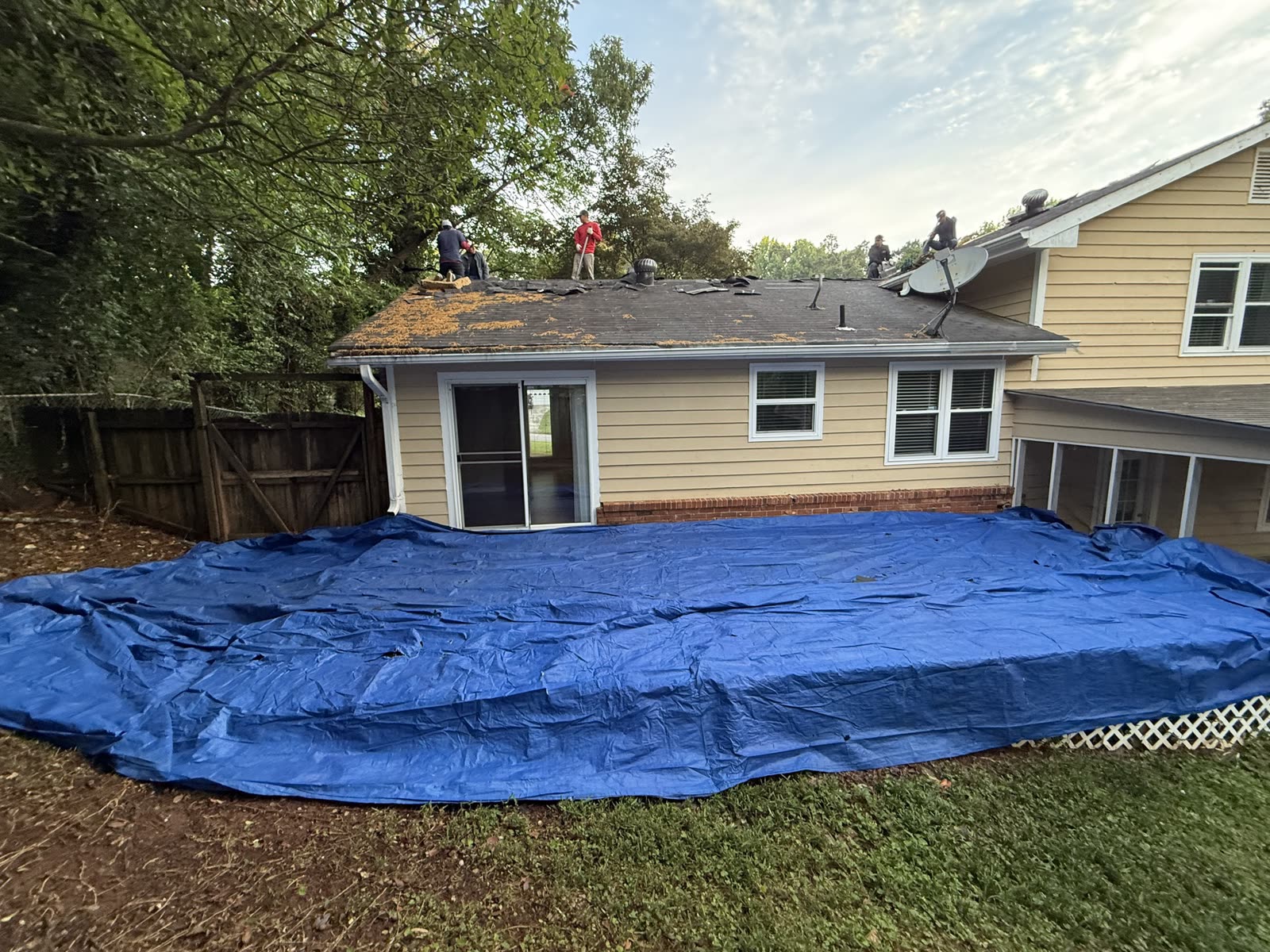
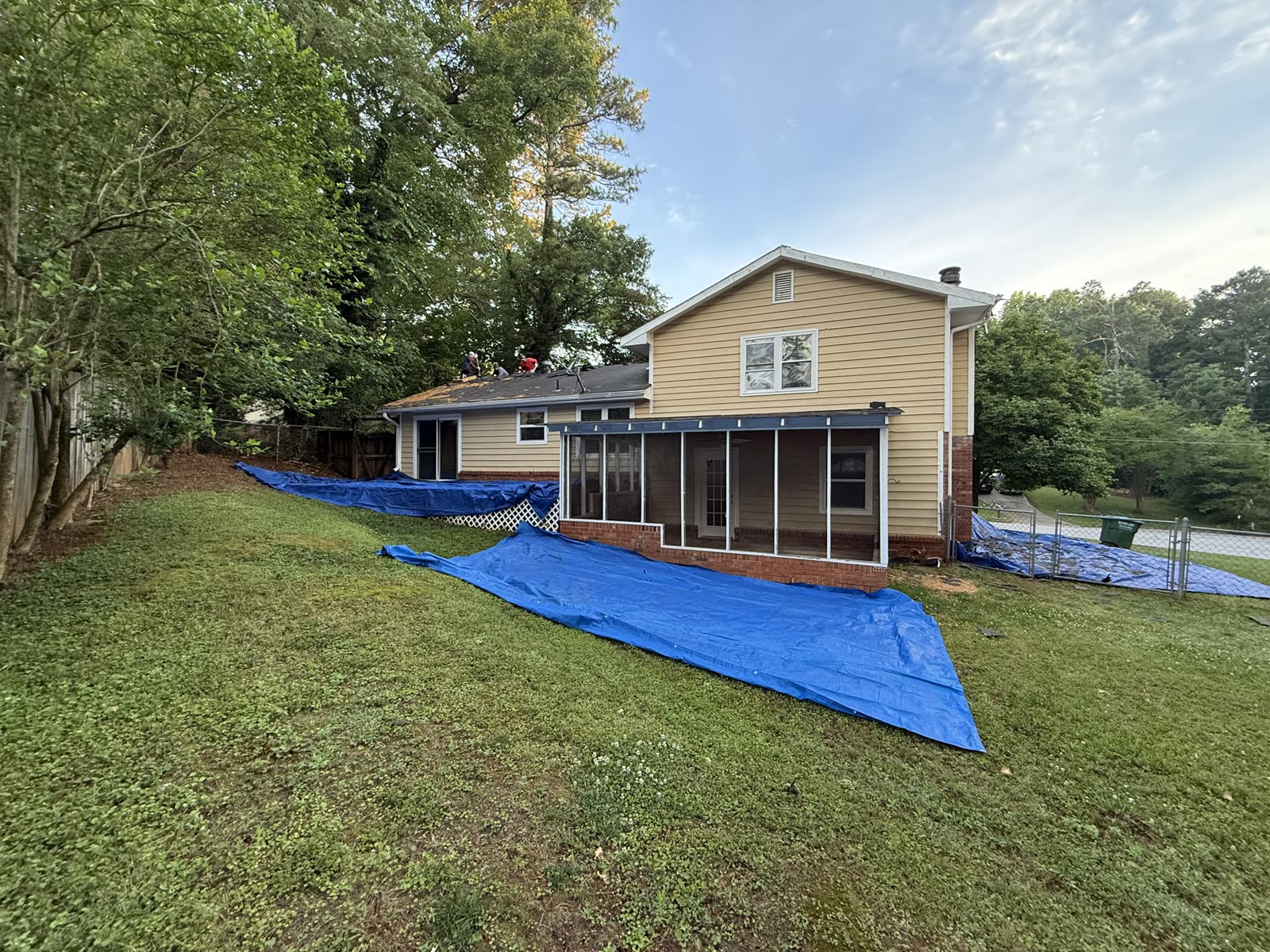
We document our jobs on video, not just photos. This is what a tear-off and re-deck actually looks like:
The part nobody budgets for: rotted decking
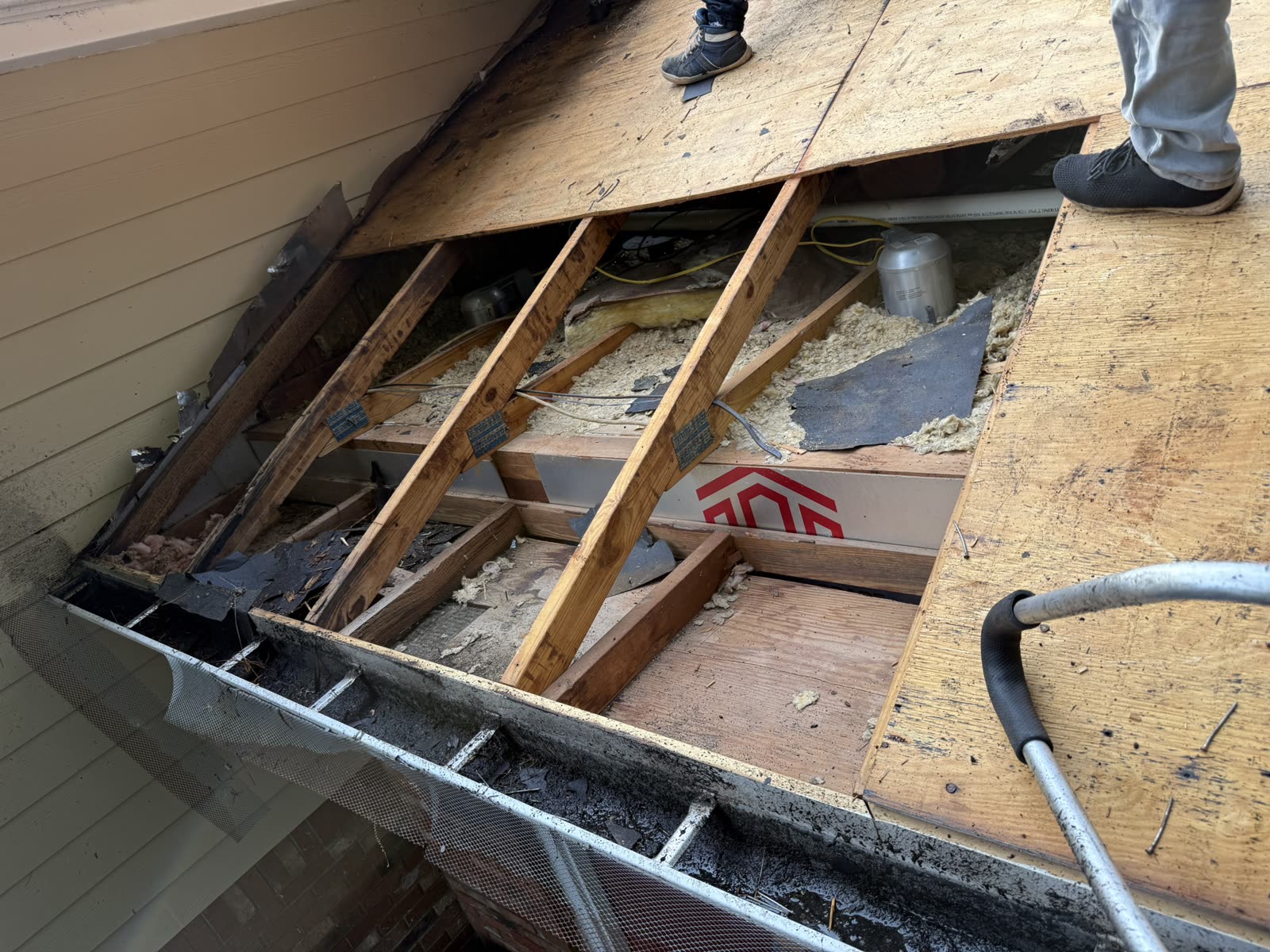
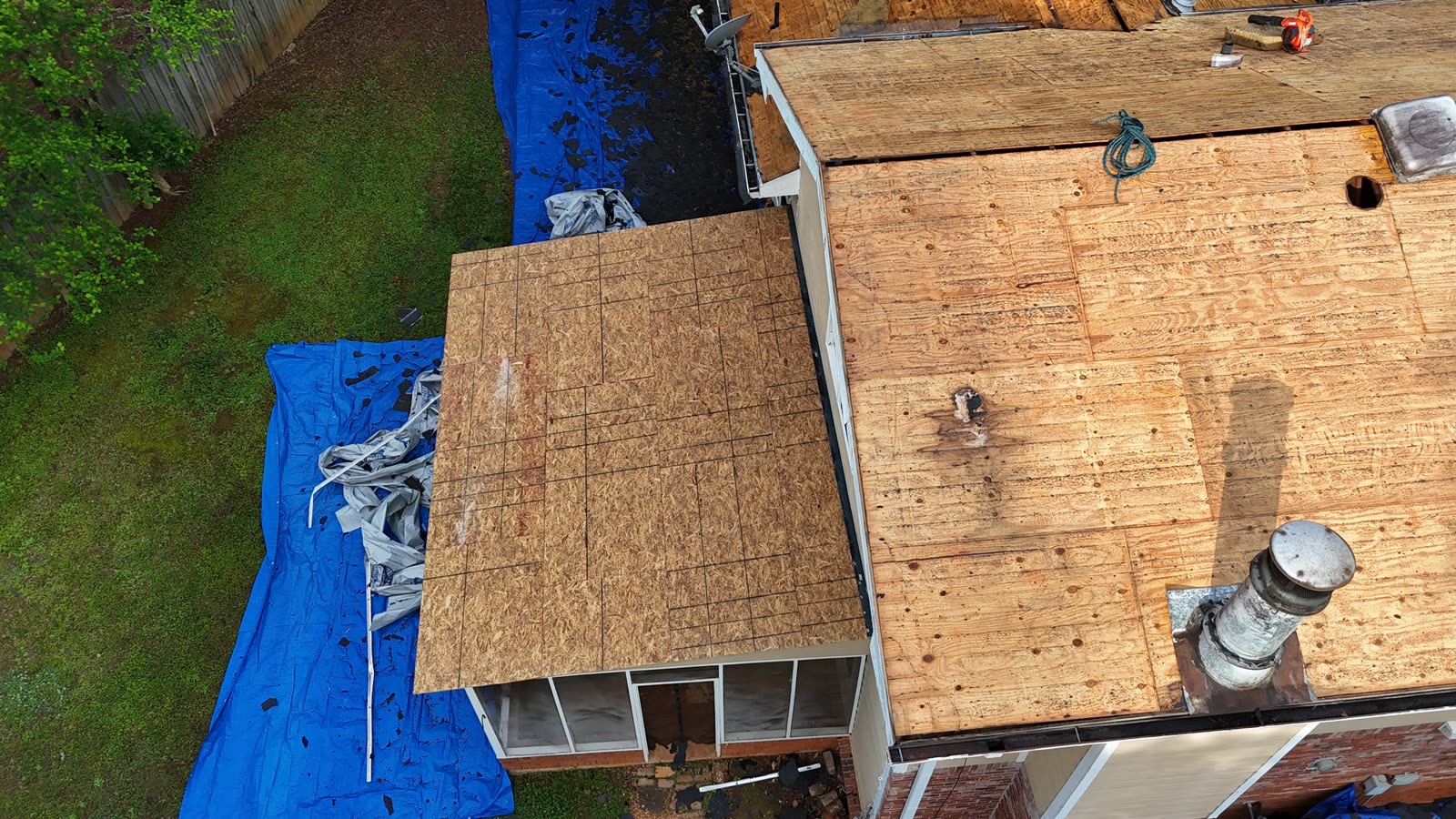
Those soft spots from the inspection turned out to be exactly what they felt like. When the old shingles came off, sections of decking were rotted through to the rafters — you can see daylight through it in the photos below. We cut out every compromised sheet and re-decked those sections with new plywood before a single shingle went down.
This is the difference between a roof that looks new and a roof that is new. Shingles over rotten decking is lipstick — the nails have nothing solid to bite, and the new roof fails years early. It’s also why we write decking inspection into every roof replacement contract up front, with a per-sheet price agreed before tear-off, so a rot discovery is a documented line item, not a surprise invoice.
Why replace a roof you're about to walk away from?
Because the math usually works in the seller’s favor. A new roof with a 50-year TAMKO warranty and 25-year workmanship coverage that transfers to the buyer does three things at once: it takes the single biggest inspection objection off the table, it keeps the buyer’s agent from using a “$25,000 roof problem” as a negotiating hammer on an $11,000 job, and it makes the listing photos look right from the street. Agents in the Lilburn and Lawrenceville market know it, which is why a meaningful share of our replacement calls now come from sellers and their realtors before listing day. Details on the transferable coverage are on our warranties page.
Getting a home ready to sell, or buying one with a questionable roof? Call (470) 573-6405 or book a free inspection — we’ll give you the straight answer and the photos to back it up.
More from this project